
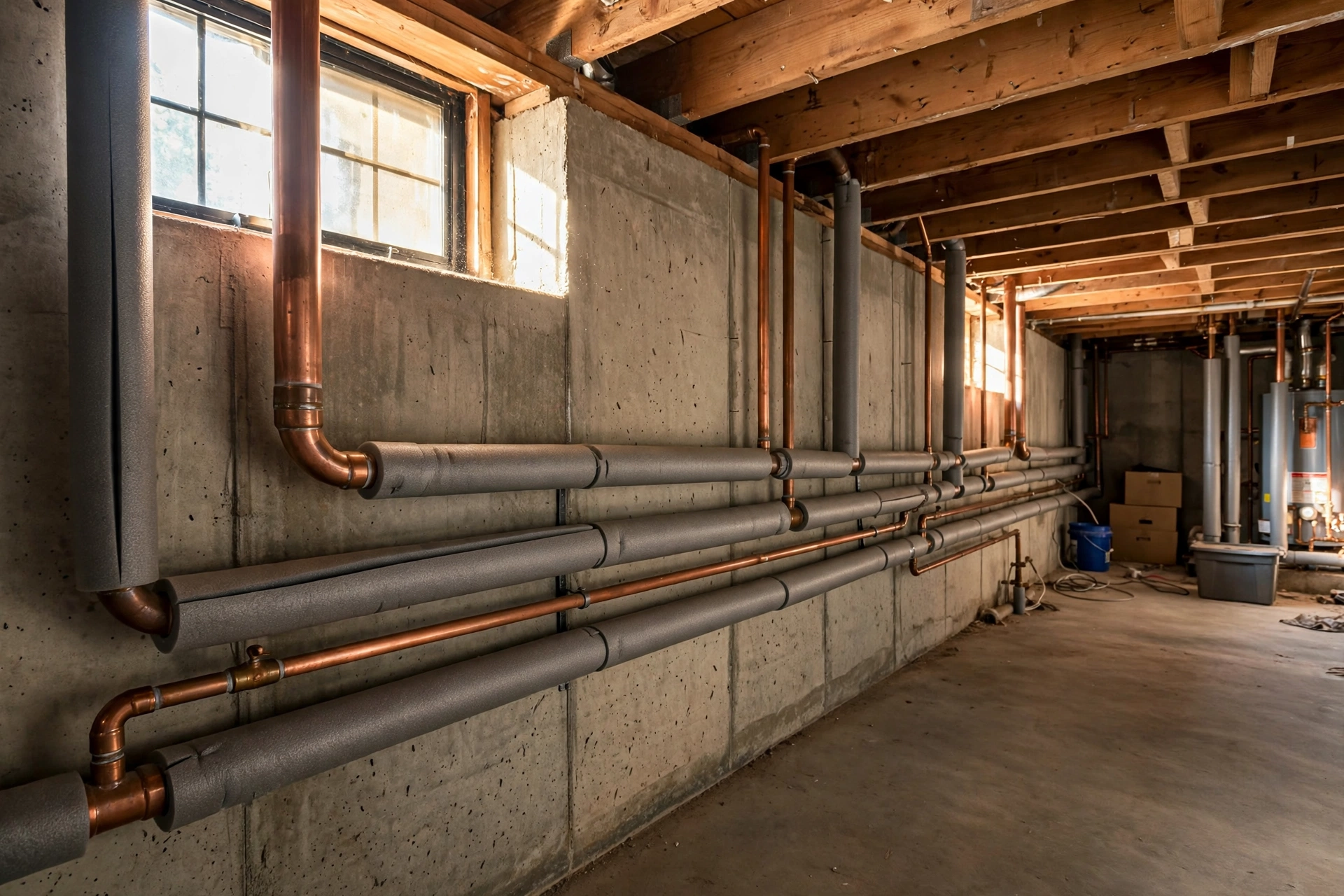
How to Prevent Frozen Pipes in Prospect Heights Before the First Hard Freeze
Updated October 2026
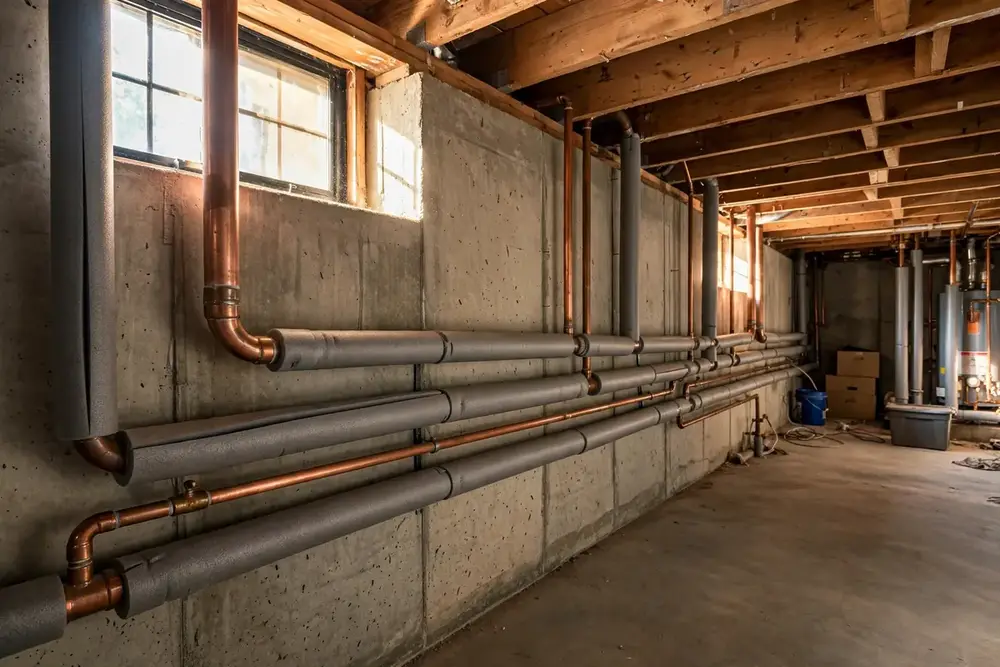
Quick answer: Insulate every pipe you can reach in outside walls, crawl spaces and the garage. Seal the drafts around them. On the coldest nights, open the sink cabinets and let one faucet drip. And before winter starts, find your main shutoff valve. If a pipe does freeze, that valve is the difference between a nuisance and a flooded room. If you searched for frozen pipe prevention prospect heights, this guide covers exactly that.
Key takeaways
- Pipes can start freezing at 32°F. The real danger zone is a night that stays below 20°F.
- Insulation slows freezing down. It does not stop it on its own. Seal the drafts too.
- One dripping faucet protects the line it sits on. You do not need to drip them all.
- Never thaw a pipe with a torch or open flame. Slow, gentle heat only. If a pipe is bulged or cracked, do not thaw it yourself.
- A frozen pipe is a $200 to $500 thaw. A burst one is a $1,000 to $4,000 repair. Prevention is the cheap option.
Why do pipes freeze in Prospect Heights homes?
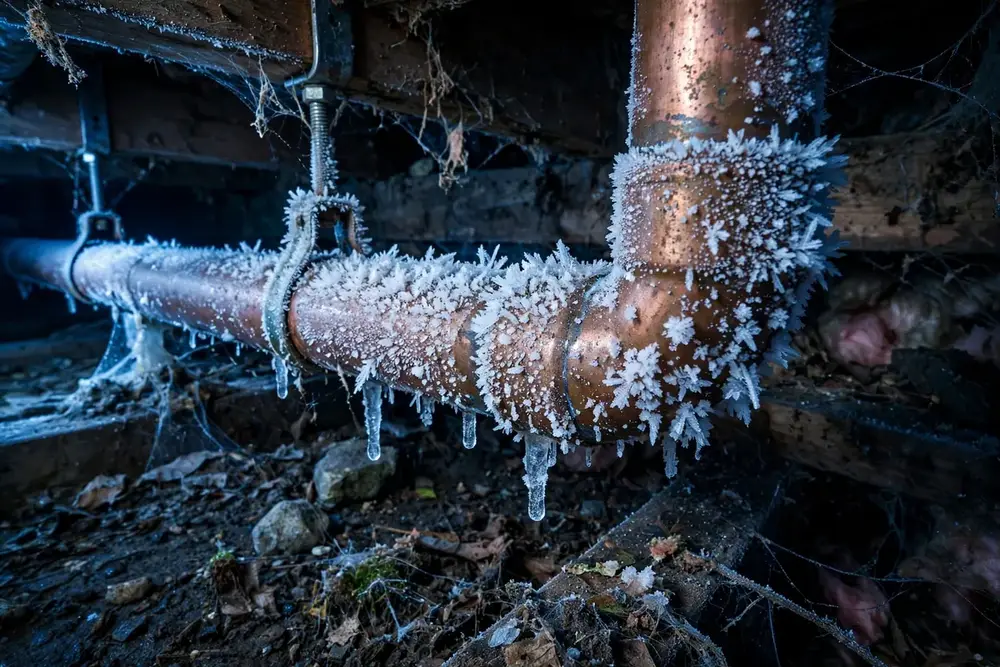
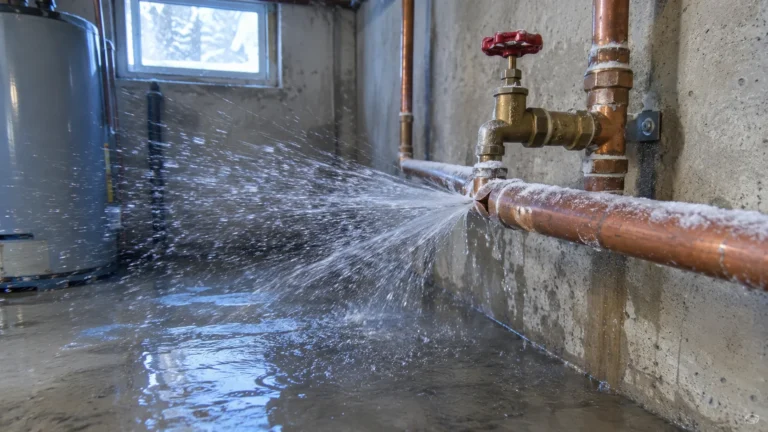
Water expands as it turns to ice. That pressure has to go somewhere, so the pipe splits. Here is the cruel part: the split usually stays silent while the pipe is frozen. You find it at the thaw, when water starts moving again and pours through the crack.
Pipes freeze first where heat never reaches: attics, crawl spaces, garages and unheated basements. Any pipe hiding inside an outside wall is at risk too.
Prospect Heights makes this worse. Many homes here went up in the 1960s, 70s and 80s. Ranches have supply lines run through exterior walls, and utility rooms sit against cold garage walls. One small gap in the wrong place lets January air sit on a pipe all night. Condos and townhomes are not safe either: one unit’s frozen line can send water into the neighbor below.
At what temperature do pipes freeze?
Pipes can freeze once the air around them drops to 32°F. The risk jumps on nights that stay below 20°F, and those nights are common in a Chicago-area January. Wind makes it worse: a pipe on a windy exterior wall can freeze even when the thermometer reads a few degrees higher.
The number to remember is 55°F. Never let your home drop below it in winter, even when you travel.
Which pipes freeze first?
Check these spots first.
| Place | Why it freezes | What to do |
|---|---|---|
| Pipes in outside walls | Cold air reaches them through gaps | Insulate and seal the gaps |
| Crawl spaces and attics | Little or no heat reaches them | Insulate pipes and seal air leaks |
| Garage-wall utility rooms | Garage walls stay cold | Insulate pipes and keep the garage door closed |
| Outdoor hose connections | Water stays trapped inside | Remove hoses before the first freeze |
| Sprinkler and irrigation lines | Water sits in exposed lines | Drain them before the first freeze |
| Cabinets on outside walls | Closed doors block warm air | Open the doors on cold nights |
Warning signs a pipe is freezing
Catch it early and a freeze is an inconvenience. Miss it and it becomes a flood. Watch for:
- Little or no water from a faucet that worked fine yesterday
- Frost on an exposed pipe, or one section much colder than the rest
- A pipe that looks swollen or bulged in one spot, or shows a crack line
- Strange noises, like gurgling or whistling when you open a tap
- A sudden drop in water pressure anywhere in the house
If one pipe is frozen, its neighbors are close behind. Check them all.
When should you get your pipes ready?
Start in October or early November, before nights drop below freezing. Pick a dry weekend. The work takes a few hours in most homes. A freeze warning is a bad time to start. Nobody does their best work in a cold crawl space at midnight.
| When | What to do |
|---|---|
| Now | Find weak spots, then insulate and seal |
| Before the first freeze | Remove hoses, drain sprinkler lines, check your main shutoff valve |
| On very cold nights | Open cabinet doors and drip one faucet |
| Before you leave town | Keep the heat on, or book a full drain-down |
What are the steps to prevent frozen pipes?
Step 1: Find your weak spots
Walk through your home with a roll of tape. Look for pipes in unheated areas and on outside walls. Mark each one so you can find it again fast.
Step 2: Insulate and seal
Wrap both hot and cold pipes with foam sleeves. If you use heat tape or heat cable, buy a UL-listed product and follow the package directions exactly. Do not overlap it, and do not cover it with insulation unless the label says you can. Then seal the gaps where cold air sneaks in, using caulk or foam. Check the crawl space, the garage wall, and the spot where pipes enter the house.
Step 3: Disconnect hoses
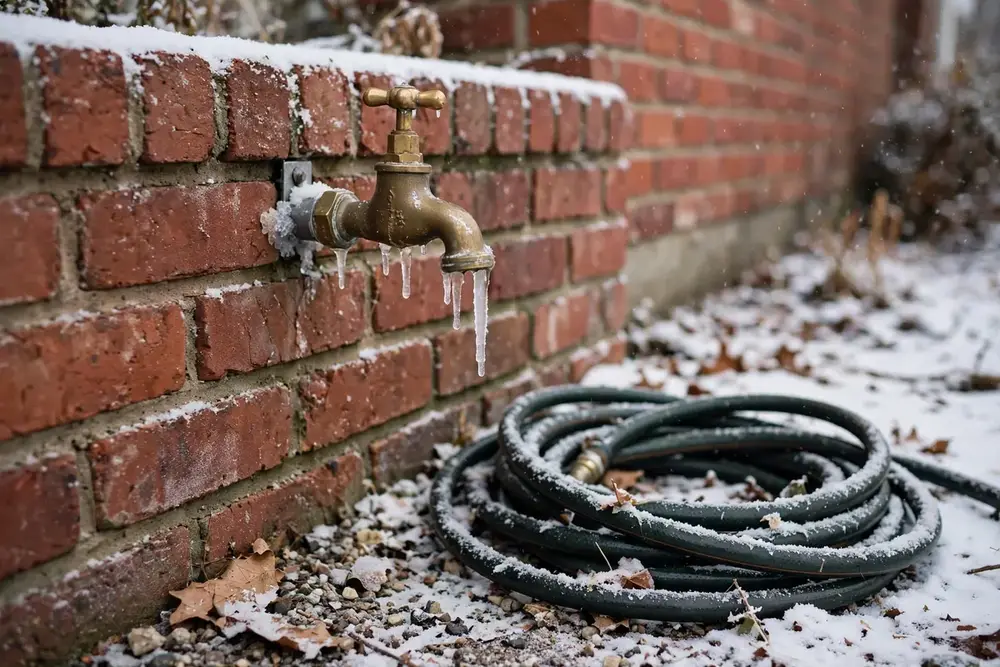
Pull every garden hose off its outdoor faucet. A hose left connected traps water in the faucet, and that water freezes back into your supply line. If you have an indoor valve for that faucet, close it, and leave the outdoor faucet open so the last of the water can drain out.
Step 4: Open cabinets and drip a faucet
On very cold nights, open the doors under kitchen and bathroom sinks so warm room air can reach the pipes. If you have small children or pets, move cleaners and chemicals out of reach first. Then let one faucet drip.
Do I need to drip every faucet?
No. Drip the faucet that the most exposed pipes feed, usually one on an outside wall. A slow, pencil-thin trickle is enough. Moving water is much harder to freeze, and an open faucet also relieves pressure if ice does start to form.
One more habit: keep the thermostat at the same temperature day and night during a cold snap. A slightly higher heating bill is far cheaper than a burst pipe.
Step 5: Keep the heat on when you travel
Going away in winter? Set the thermostat no lower than 55°F. An empty cold house can freeze pipes in a single night. If the home will sit empty for weeks, ask about plumbing winterization instead.
Step 6: Find your main shutoff valve
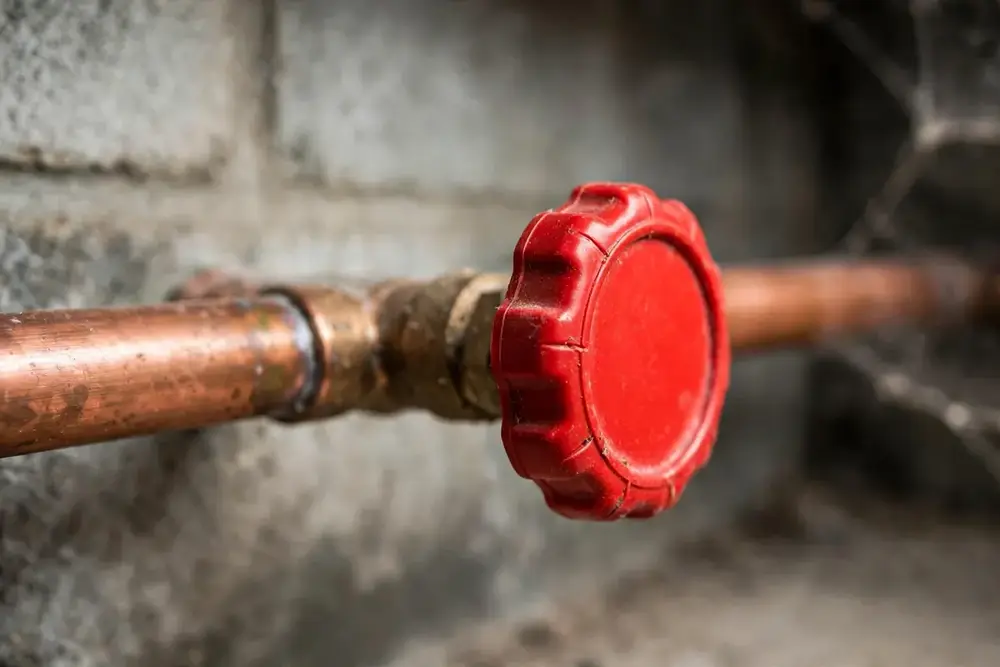
In most Prospect Heights homes it sits in the basement or crawl space, where the water line enters from the street. Find it now, on a calm day, not at 2 a.m. with water spreading across the floor. Make sure everyone in the house knows where it is, and check that the handle still turns freely.
Does insulation alone stop freezing?
No. Insulation slows heat loss. It does not make heat. In a very cold space, an insulated pipe can still freeze. It just buys you time. Seal the air leaks, open the cabinet doors, and drip a faucet on the coldest nights. The three together are what actually work.
What should you do if a pipe freezes?
Act fast, but stay calm. In order:
- Check your taps. Only a trickle, or nothing at all? Suspect a frozen pipe.
- Look at the pipe first. If you see a split, a bulge, a crack line or any leaking, shut off the main water valve right away and call a plumber. Do not try to thaw a pipe that is already stressed.
- Open the nearest faucet a little. Melting water needs somewhere to go.
- Warm the pipe slowly. Use a hair dryer, an electric heating pad, or towels soaked in hot water. Start near the faucet and work back toward the frozen section.
- Go slowly. Heat slammed onto a frozen pipe can crack it. Gentle wins. If an exposed pipe has not moved after about 45 minutes, the freeze is deeper than you can see. Stop and call.
- Check every other tap. One frozen pipe usually has company.
Once water flows again, turn it on fully and walk the line looking for leaks at joints and along the pipe. And if anything starts leaking while you thaw, shut the main valve off first and ask questions later.
Call a plumber if you cannot find the frozen spot, cannot reach it, or see a crack. We thaw with professional equipment — never an open flame. What that work involves is laid out on our frozen pipe repair page.
What NOT to do when thawing a pipe
- Never use a torch or open flame. It can boil the water inside the pipe, burst it, and start a fire. This is the one rule with no exceptions.
- Never use a heat gun on full blast. Extreme, uneven heat damages pipes and melts plastic lines.
- Never leave a space heater running unattended near a pipe. If you use one at all, keep it away from anything that can burn.
- Never keep the faucet closed while you thaw. The pressure has to escape somewhere.
- Never wait it out. Ice keeps pressing on the pipe, and a stressed pipe can split at any point. The thaw then arrives all at once, through the crack.
How do I know if a pipe split?
Look for wet drywall, fresh stains on walls or ceilings, or water pressure that never quite comes back. Listen too: if you hear running water when every tap is off, water is going somewhere it should not. See any of these? Shut off the main valve and call for help.
How much does it cost to thaw or protect pipes in Prospect Heights?
Costs depend on access, pipe age, and how much damage the ice did. These are typical Chicago-area ranges from our plumbing cost guide, and your written quote on site is the price that counts.
| Service | Typical range |
|---|---|
| Frozen pipe thawing | $200 to $500 |
| Burst pipe repair | $1,000 to $4,000 |
| Whole-home winterization for an empty home | $200 to $450 |
A pipe that has already split is priced as a repair, not a thaw. Easy access and little water damage keep a burst repair at the low end.
Does home insurance cover a burst pipe?
Often it covers sudden bursts, but not slow leaks or damage from neglect. Policies differ, so call your insurance agent before winter and ask what yours covers. If a pipe does burst, take photos of the damage, keep your receipts, and ask for an itemized invoice for any repair.
Is winterization worth it for a vacant home?
Yes, if the home will sit empty through winter. A drain-down removes the water from the pipes, so there is nothing left to freeze and burst. Compare a few hundred dollars once against a flood repair in a house nobody is watching.
When should you call a plumber for frozen pipes?
Call right away if a pipe has split, water is spreading, or you cannot find the frozen spot. Call too if no water comes out of any tap in the house. That can mean the freeze is at the main entry, and the main line is not a DIY job.
Not sure which help you need? This is the honest version:
| Your situation | The service that fits | Typical cost |
|---|---|---|
| Pipe frozen, no leak yet | Frozen pipe repair (thawing) | $200 to $500 |
| Pipe split, or water spreading | Emergency plumbing (burst pipe repair) | $1,000 to $4,000 |
| Home will sit empty this winter | Plumbing winterization (full drain-down) | $200 to $450 |
How booking works
- Call (847) 534-9849. The line is open day and night. If water is moving where it should not, we talk you through shutting it off first.
- Get your price in writing, on site, before any work begins.
- Approve it, and only then does the work start. No approval, no work. The written quote is the price, line by line.
Water already spreading? Go straight to emergency plumbing. Want a calm, planned quote instead? Contact us and we will take it from there.
Related guides
- How to test your sump pump before spring rain — when the snow melts, your sump pump gets its first real test.
- Prospect Heights plumbing cost guide — every service price, in writing.
Water does not wait. Neither do we. A frozen pipe, a split pipe, a flooding basement: call (847) 534-9849 and get a price in writing on site before any work begins.


4 Comments
Comments are closed.