
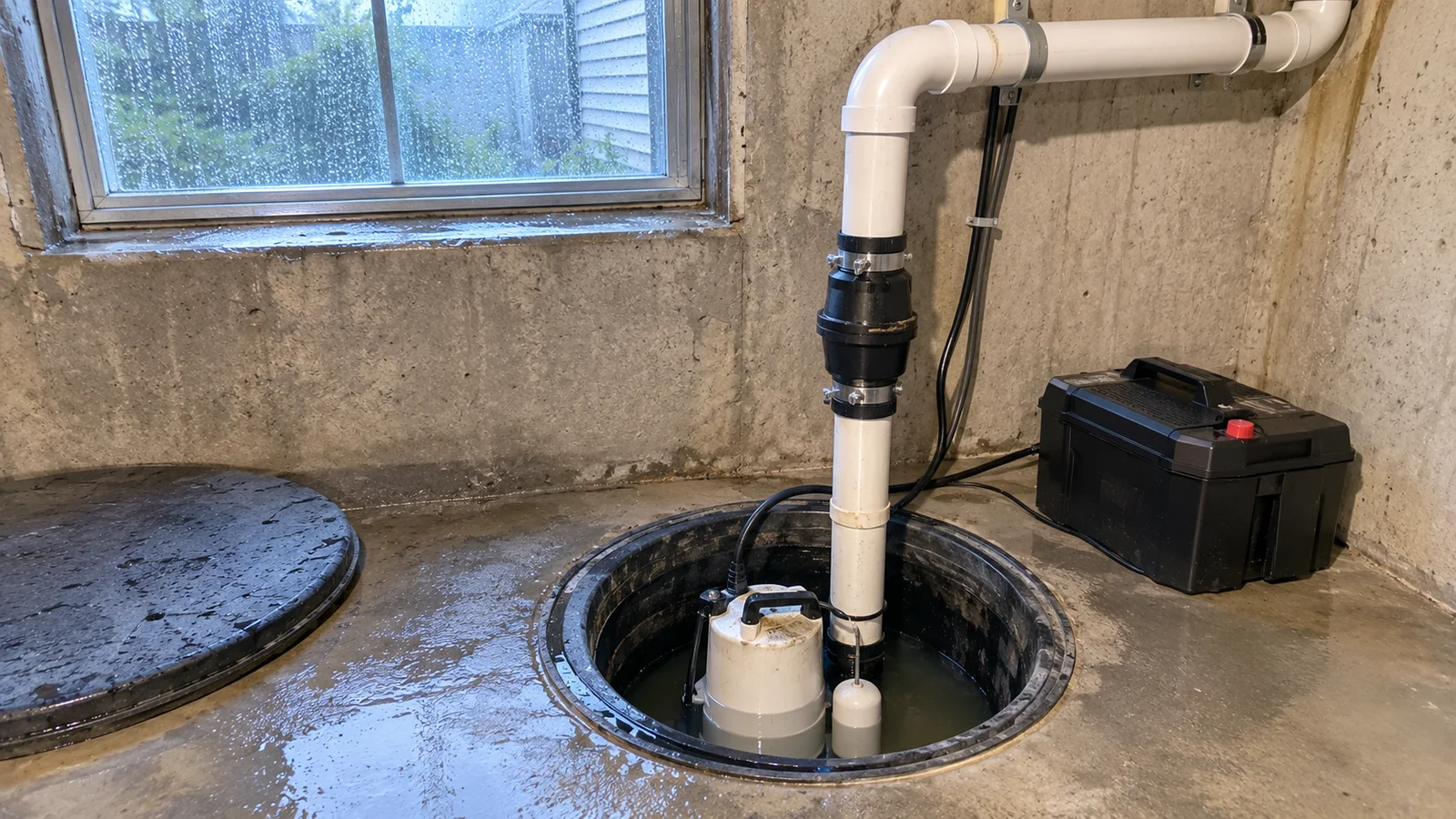
Sump Pump Installation Cost in Arlington Heights, IL
Sump pump installation in Arlington Heights with battery backup costs $1,250 to $1,850. A basic pump only job runs about $475 to $1,600, per a local cost listing. National guides show $500 to $4,000. The price depends on the pump, the pit and the drain line. You get your exact price in writing before work starts.
Water in your basement now, or a pump that stopped working? Call (847) 534-9849. We work from Prospect Heights, IL, and we are open 24/7. Last updated November 10, 2026.
How Much Does a Sump Pump Cost in Arlington Heights at a Glance?
Here are the key facts in one place. Each row names its source.
| Question | Answer | Source |
|---|---|---|
| What does our pump with backup power cost? | $1,250 to $1,850 | Plumbing Prospect Heights |
| What does a basic install cost in Arlington Heights? | About $475 to $1,600, with an average near $1,000 | Local cost listing for Arlington Heights |
| What do Chicago area guides show? | About $561 to $1,674, with an average near $999 | Chicago area cost listing |
| What does it cost across the US? | $500 to $4,000, with an average of about $1,400 | This Old House |
| What does a replacement cost? | $350 to $1,000 | This Old House |
| What does backup power add? | About $200 to $600 | Published cost guide |
| Does Arlington Heights offer a rebate? | A sewer backup rebate pays 75 percent up to $11,250, but it targets overhead sewers | Village of Arlington Heights |
| Who answers permit questions? | The Village Building and Life Safety Department at (847) 368-5560 | Village of Arlington Heights |
What Is the Average Cost to Install a Sump Pump?
The average cost to install a sump pump is about $1,400 across the US and about $1,000 in Arlington Heights. The final price depends on the job.
The table shows typical installed costs by job. These are ranges from published guides. They are not quotes.
| Job | Typical range |
|---|---|
| Replace a failed pump in an existing pit | $350 to $1,000 |
| Pedestal pump, installed | $550 to $1,200 |
| Submersible pump, installed | $900 to $2,400 |
| New submersible pump with a new pit and above ground drain | About $1,400 |
| Pump with backup power, installed (our package) | $1,250 to $1,850 |
Every range above comes from published guides except our backup power package, which is our own price. Guides do not agree on every number, so you will see overlap and gaps. That is why we give you a range first and the reasons behind it. Your price comes from your own basement.
Is Replacing a Pump Cheaper Than a New Install?
Usually yes. A replacement uses the pit, pipe and outlet you already have. A new install needs a pit, a drain line and power. A repair costs less still when one part failed, such as a stuck float or a clogged intake.
Replace a pump that is old, loud or cycling nonstop before a storm hits it. We tell you which fix fits your basement and why.
What Do the Key Sump Pump Terms Mean?
A few terms show up in every quote. Here is what each one means.
| Term | Plain meaning |
|---|---|
| Sump pit or basin | The hole in your basement floor where groundwater collects |
| Pedestal pump | A pump with the motor above the pit |
| Submersible pump | A pump that sits inside the pit underwater |
| Float switch | The part that turns the pump on when the water rises |
| Check valve | A one way valve that stops water from running back into the pit |
| Discharge line | The pipe that carries water out of your home |
| Battery backup | A second power source that runs the pump when the power fails |
| Gallons per hour | How much water a pump can move in an hour |
| French drain | A buried pipe that collects groundwater and leads it to the pit |
| Overhead sewer | A setup that lifts waste above the basement floor to stop sewer backup |
What Makes the Price Go Up or Down?
Seven things move the price.
| Factor | Usually costs less | Usually costs more |
|---|---|---|
| Pit | Existing pit | New pit cut through concrete |
| Pump type | Pedestal | Submersible or higher horsepower |
| Backup | None | Battery or water powered backup |
| Drain line | Short run above ground | Long or buried run |
| Access | Open basement | Finished walls or tight space |
| Electrical | Outlet already there | New outlet or circuit needed |
| Permit | None needed | Permit and inspection |
The pit makes the biggest difference. If your home already has a pit, the crew swaps the pump and checks the pipe. If you need a new pit, the crew must break the floor. One guide lists $500 to $1,200 for basin labor alone. The same guide lists $2,500 to $5,000 for drilling through a concrete foundation.
The drain line adds cost too. An above ground pipe runs about $150 to $400 in one guide. A buried pipe runs about $250 to $2,000. A French drain tie in adds more, and guides list $1,000 to $6,500.
A check valve is a small part. It costs about $30 to $80. Labor matters as well. One guide puts Chicago area plumber labor at about $95 to $140 per hour. A new pit takes more hours than a simple swap.
What Size Sump Pump Do You Need?
Pump size depends on horsepower. A pump with more horsepower moves more gallons per hour. A bigger pump is not always better, because pit size and flood risk decide the right fit.
| Horsepower | Typical installed cost |
|---|---|
| One third horsepower | $900 to $1,800 |
| One half horsepower | $1,200 to $2,400 |
Ask us to size the pump to your pit and your flood risk. We explain the choice before you approve a price.
What Is the Difference Between a Pedestal and a Submersible Sump Pump?
A pedestal pump sits above the pit, and a submersible sump pump sits inside it underwater. Pedestal pumps cost less and are easier to repair. Submersible pumps run quieter and handle more water.
| Feature | Pedestal pump | Submersible pump |
|---|---|---|
| Motor location | Above the pit | Inside the pit underwater |
| Noise | Louder | Quieter |
| Power | Lower | Higher |
| Repair | Easier | Harder |
| Fits | Lower flood risk | Higher flood risk |
| Pump price alone | About $80 to $800 | About $90 to $1,000 |
A submersible pump suits most finished basements. It is quiet and handles heavy rain better. A pedestal pump can work where noise does not matter and flood risk is low.
Do You Need a Battery Backup Sump Pump?
A battery backup sump pump keeps running when the power fails. A pump with no backup stops when the power stops. Heavy rain and power loss can happen at the same time.
| Backup type | Typical cost | What to know |
|---|---|---|
| Battery backup only | About $150 to $250 | Needs its own outlet |
| Battery backup added to a system | About $200 to $600 | Needs an extra outlet |
| Water powered backup | About $200 to $900 | Uses your water pressure |
Our package covers the pump plus the backup, installed together for $1,250 to $1,850.
The Illinois Plumbing Code sets rules for water powered pumps. It says they may serve only as emergency backup pumps. Each one needs a battery powered alarm rated at least 85 dBa at 10 feet. A stormwater version needs a dual check valve with an atmospheric vent.
A water powered backup uses your home’s water pressure. It does not need a battery. It does need a working water supply, so ask about the tradeoffs before you choose.
Does Arlington Heights Require a Sump Pump Permit?
Ask the Village before you start. Arlington Heights lists permits that cover sump pits and plumbing work. Its page does not say which one fits every sump pump job.
Here is what the Village lists:
- An Interior and Exterior drainage permit covers any interior drain tile, sump pit and drainage management.
- A General Plumbing Permit for residential work covers standalone plumbing projects.
- Anyone who needs a permit must use the Civic Access Portal.
- The Building and Life Safety Department answers questions at (847) 368-5560.
One cost guide lists permit fees of $50 to $150. The Village fee may differ. Ask us whether a permit belongs in your price. The written price shows it before you say yes.
Where Can a Sump Pump Discharge in Arlington Heights?
Point the discharge away from your foundation. Many Illinois towns ban connecting a sump pump to the sanitary sewer. Check Arlington Heights rules with the Village before you pick a route.
Winter matters too. Subzero nights happen 5 to 8 times a year in Arlington Heights. Water left in a discharge line can freeze and block the pump. Slope the line so water drains out, and ask how the end of the pipe will handle ice. Our frozen pipe prevention guide covers the pipes around it. If a freeze has already split a pipe, see our frozen pipe repair service.
Will a Sump Pump Stop Sewer Backup?
No. A sump pump handles groundwater around your foundation. It does not stop sewer water backing up through floor drains.
Arlington Heights runs an Enhanced Sewer Backup Rebate Program. The Village pays 75 percent toward qualifying homeowners. The project must be an overhead sewer system or an approved alternative flood control system. The rebate caps at $11,250.
The program targets sewer backup, not sump pumps. Call the Village to see if your project qualifies and what the current terms are. You can read the Village stormwater and flood management page yourself.
Is a Sump Pump the Same as Basement Waterproofing?
No. A sump pump removes water that collects in the pit. Basement waterproofing seals or protects the foundation so less water gets in.
Cracked walls or leaks at the wall need a separate fix. A pump alone will not stop them. See water at the walls instead of the floor? Ask for a basement check before you buy a pump.
How Do You Know You Need a New Sump Pump?
You need a new sump pump when it runs nonstop, fails a test, makes strange noises or shows rust. Call when you see any of these signs:
- The pump runs nonstop, even when the pit looks low.
- The pump turns on and off in quick bursts.
- The pump makes grinding or rattling sounds.
- You see rust or corrosion on the pump or the pipe.
- The float switch sticks and the pit fills with no pump running.
- The basement smells damp or the floor feels wet near the pit.
Test your pump before heavy rain. Pour water into the pit and watch it start, empty the pit and shut off. If anything looks wrong, call before the storm arrives.
What Happens on Install Day?
A sump pump install has six steps.
- The crew checks the pit, the power outlet and the discharge pipe.
- The crew removes the old pump, or cuts a new pit if your home has none.
- The crew sets the basin and the pump.
- The crew connects the discharge pipe and adds a check valve.
- The crew fills the pit with water to test the pump.
- The crew shows you how the pump starts and stops, and how to test it.
A new pit means breaking the floor, so the job takes more labor and more cleanup. A swap in an existing pit is simpler. Clear the area around the pit before the visit.
What Should a Good Sump Pump Quote Include?
Ask for a written quote. Look for these items:
- The pump brand, model, type and size
- A new basin, or your existing pit
- The length, route and end point of the discharge line
- A check valve
- Electrical work, such as an outlet or a new circuit
- Backup power, included or priced apart
- Who handles the permit
- What the quote covers for the pump and the labor, in writing
A quote with one total and no detail is hard to compare. Two quotes can look different because they cover different work.
When Should You Install a Sump Pump?
Before you need one. Chicago area basements face spring rain and snowmelt, and that is when a pump works hardest. Wait until water is coming in and you pay for an emergency. Your choices shrink too.
Planning ahead lets you compare quotes, handle a permit without a rush and pick a pump that fits. Damp spots, a musty smell or water along the walls after heavy rain are your signal.
How Do You Keep a Sump Pump Working?
A good install still needs a little care. Test your sump pump every March, before the spring rain. Follow these habits:
- Pour a bucket of water into the pit every few months. Watch the pump start, empty the pit and stop.
- Check that the discharge line is clear and water moves away from the house.
- Keep debris out of the pit and keep the cover on.
- Know which outlet the pump uses, and check it.
- Replace an old pump before it fails.
What If Water Already Got In?
A new pump stops future flooding. It does not remove water already inside. The order matters: stop the source, remove the water, dry the space, then repair.
Wet drywall, carpet and stored items hold moisture. They can cause damage if you leave them. A drying and repair company handles the cleanup. We handle the pump and the plumbing side. Call (847) 534-9849.
How Do You Get Your Price?
To get a price, call (847) 534-9849 at any hour. Then follow these steps:
- Tell us what you have. Do you have a pit, which pump, and is there a backup?
- We explain the range for your job and what moves it.
- You get the price in writing.
- You approve it, and then the work begins.
We never guess a price before we know the job. You get the range first and the reasons behind it.
Sump Pump Service for Arlington Heights Homes
We work from Prospect Heights and serve Arlington Heights homeowners around the clock. You might live near downtown Arlington Heights, close to Lake Arlington, or off Northwest Highway, US 14. You might be on Rand Road, US 12. Either way, you call the same number: (847) 534-9849.
Our Arlington Heights service area page shows where we work.
Conclusion
Installing a sump pump in Arlington Heights with battery backup costs $1,250 to $1,850. A basic pump only job runs about $475 to $1,600. Across the US, guides show $500 to $4,000. The pit, the pump type, the backup and the drain line move the price most.
Check with the Village about permits and discharge rules. Ask about backup power, because power can fail in a storm. Remember that a sump pump does not stop sewer backup.
Whatever you choose, get the price in writing first. Call (847) 534-9849. We are open 24/7.
Sump Pump Installation in Arlington Heights: FAQ
How much does sump pump installation cost in Arlington Heights?
Sump pump installation in Arlington Heights with battery backup costs $1,250 to $1,850. A basic pump only job runs about $475 to $1,600, according to a local cost listing. National guides show $500 to $4,000. Your exact price comes in writing before work starts.
How much does it cost to replace a sump pump?
Replacing a failed sump pump costs about $350 to $1,000 when your home already has a pit. A new pit raises the price. We give you the range and the reasons before you approve anything.
Do I need a battery backup sump pump, and what does it cost?
A backup keeps the pump running when the power fails. Our package with backup power costs $1,250 to $1,850. A backup added to an existing system runs about $200 to $600 and needs an extra outlet.
Is a pedestal or submersible sump pump better?
A submersible pump suits most finished basements because it runs quieter and handles heavy rain. A pedestal pump costs less and is easier to repair. Your flood risk and noise needs decide which one fits.
Does Arlington Heights require a permit for a sump pump?
The Village lists a drainage permit that covers sump pits and a general plumbing permit for standalone plumbing work. Its page does not say which one fits every job. Call the Building and Life Safety Department at (847) 368-5560.
Will a sump pump stop sewer backup?
No, a sump pump does not stop sewer backup. It handles groundwater around your foundation. Sewer water can still back up through floor drains. The Village runs a sewer backup rebate program for overhead sewer systems.
Where should my sump pump discharge?
Point the discharge away from your foundation. Many Illinois towns ban connecting a sump pump to the sanitary sewer. Check Arlington Heights rules with the Village first.
Why is my sump pump running when it has not rained?
Common causes include high groundwater and a stuck float switch. A check valve that lets water flow back into the pit can also cause it. A running pump with no rain is a sign to call. We can find the cause.
Can you install a sump pump in a basement that does not have one?
Yes. The crew cuts a pit into the floor, sets a basin and connects a discharge pipe. That is a new pit job, so it costs more than a swap.
How long does a sump pump last?
Pump life depends on the model, how often it runs and how well you maintain it. A pump that runs nonstop in wet seasons wears out sooner. Test it often. Replace it when it is old, loud or cycling nonstop.
Does homeowners insurance cover sump pump failure?
Many standard policies do not cover water damage from a failed or backed up sump pump unless you add coverage. Your policy may differ. Read it and ask your insurer. Keep photos and receipts if damage happens.
How do I book a sump pump install?
Call (847) 534-9849 to book. We are open 24/7. You get the price in writing before work starts, and you approve it first.
Sources
- This Old House, sump pump cost guide
- Cost Insight Hub, sump pump installation cost
- Village of Arlington Heights, stormwater and flood management
- Village of Arlington Heights, permits and licenses
- Illinois Plumbing Code, section 890.1140, special applications
Cost ranges come from published cost guides and a local cost listing. They are not quotes. The backup power package price comes from Plumbing Prospect Heights.
Business details: Plumbing Prospect Heights, 100 Coldren Dr, Prospect Heights, IL 60070. Phone (847) 534-9849. Open 24/7.



One Comment